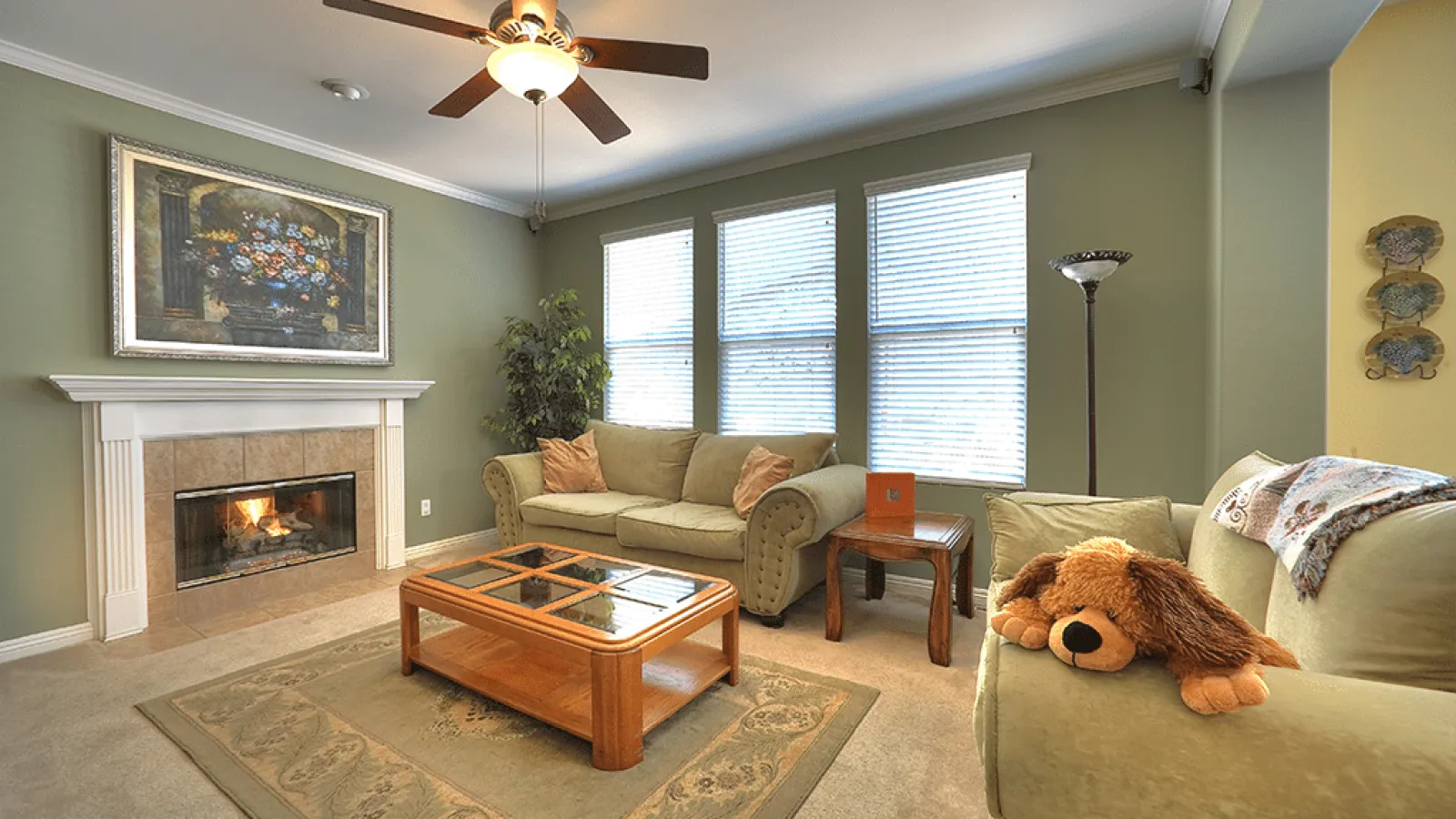

Using the proper ceiling fan direction for summer and winter is one of the simplest and most cost effective ways to improve comfort and reduce energy use in your home.
When you understand how to change ceiling fan direction, you can support your HVAC system, improve air circulation, and create a more comfortable indoor environment year-round.
For professional ceiling fan installation service in Atlanta, contact Estes Services.
What Is the Proper Ceiling Fan Direction
The correct fan blade direction changes depending on the season and the effect you want to create.
Ceiling Fan Direction for Summer
The proper ceiling fan direction for summer is counterclockwise.
When your ceiling fan spins in summer counterclockwise, it pushes air downward, creating a cooling breeze that helps your body feel cooler without lowering the thermostat.
This improves comfort and allows you to reduce reliance on your air conditioning system.
Ceiling Fan Direction for Winter
The correct ceiling fan spin in winter is clockwise at a low speed.
This setting pulls cool air upward and helps redistribute circulated warm air that collects near the ceiling. It pushes warmth back into the living space, improving comfort during colder months.
Why Ceiling Fan Direction Matters for HVAC Efficiency
While ceiling fans do not directly heat or cool your home, they play an important role in supporting your HVAC system.
Proper fan direction in the summer and winter helps:
- Improve air circulation throughout your home
- Distribute cool or warm air more evenly
- Reduce strain on heating and cooling equipment
- Lower energy consumption and utility costs
When used correctly, ceiling fans help you maintain comfort while using your HVAC system more efficiently.
Explore heating and cooling services
How to Change Ceiling Fan Direction
Understanding how to change ceiling fan direction ensures your fan works effectively in every season.
Using Remote Controls or Wall Controls
Many modern ceiling fans include remote controls or wall controls.
To change direction:
- Turn off the fan using the remote or control
- Allow the blades to completely stop
- Use the reverse function to adjust rotation
- Turn the fan back on and verify airflow
Using the Ceiling Fan Switch or Pull Chain
If your fan does not have remote controls, use the ceiling fan switch located on the motor housing.
Steps:
- Turn off the fan and wait for blades to stop
- Use a ladder to reach the unit safely
- Locate the direction switch or pull chain
- Adjust the switch to reverse blade rotation
- Turn the fan back on and confirm direction
Tips to Maximize Air Circulation and Comfort
To get the most out of your ceiling fans:
- Use fans only in occupied rooms
- Adjust thermostat settings by a few degrees to save energy
- Keep ceiling fan blades clean for better performance
- Ensure proper installation height based on ceiling height
For high ceilings, vaulted ceilings, or sloped ceilings, professional installation ensures optimal airflow and safety.
When to Consider New Ceiling Fans
Upgrading to new ceiling fans can significantly improve performance and comfort.
Modern fans offer:
- Improved airflow and efficiency
- Advanced light fixtures and integrated controls
- Quiet operation
- Better performance in large spaces or outdoor ceiling fan applications
When you install a ceiling fan, choosing the right model based on room size and layout is essential for effective air movement.
Professional Ceiling Fan Installation Service in Atlanta
Proper installation is key to safety and performance.
Estes Services provides expert ceiling fan installation service, repairs, and upgrades.
Our licensed electricians ensure:
- Secure mounting with proper mounting brackets
- Correct wiring and safe electrical connections
- Optimal fan placement for airflow
- Compatibility with existing systems
Schedule your service today