
Why Does My AC Smell Musty in the Fall? An Estes HVAC Expert Explains
Marietta, GA | HVAC Tips from Estes Services
Fall in Marietta, Georgia, can be a little confusing. One afternoon, temperatures are climbing into the 80s, and by early morning, we're waking up to temperatures in the 40s.
Welcome to fall in Metro Atlanta!
During this transition, homeowners find themselves switching between air conditioning and heating, sometimes within the same day. But these temperature swings can also bring an unexpected problem: a damp, musty smell when the air conditioner turns on.
A homeowner in Marietta recently reached out to Tristan Bentley, one of Estes Services' HVAC Lead Technicians, with this exact concern.
What started as a simple question turned into a helpful conversation about humidity, seasonal changes, and a thermostat feature many homeowners don't even know they have.
The Question: Why Does My AC Smell Like Humidity?
Homeowner: "Every time my AC turns on, I notice a smell like humidity. It doesn't happen all the time, but it's becoming more frequent. What could be causing it?"
Rather than immediately assuming something was wrong with the equipment, Tristan started with a simple question.
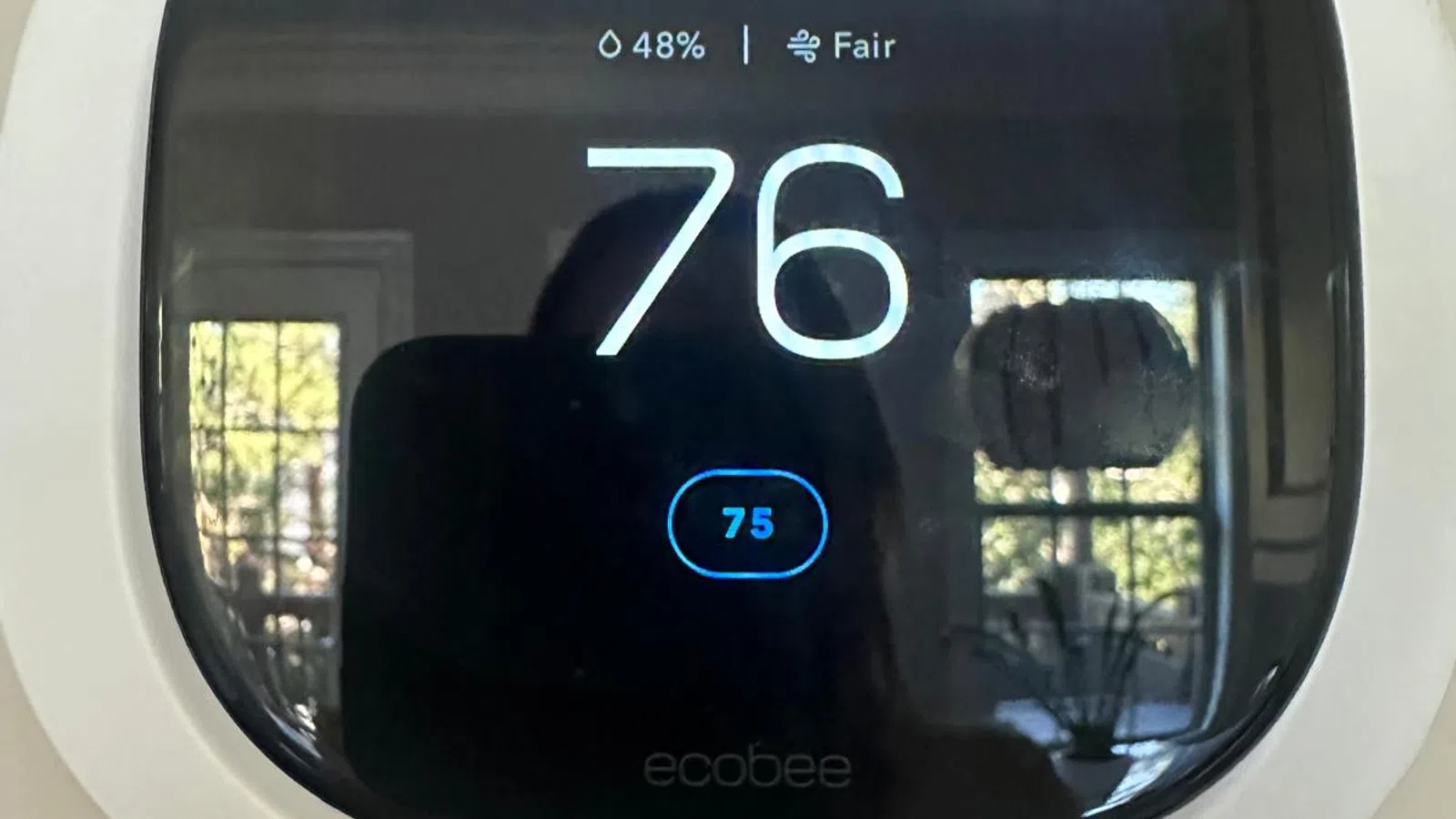
Tristan: "Does your ecobee thermostat tell you how humid the house is?"
The homeowner checked the thermostats on different levels of the house.
- Downstairs: 48% humidity
- Upstairs: 54% humidity
Tristan then asked whether the smell was noticeable throughout the house or only in certain areas.
The homeowner explained that the smell was coming primarily from the downstairs and middle levels.
This was an important detail. Humidity levels can vary throughout a home, and identifying where the smell occurs can help narrow down the possible causes.
Why Does This Happen More Often During Fall in Georgia?
Here's something many homeowners don't realize.
Your air conditioner does more than cool your home. It also removes moisture from the air.
During Atlanta's hot summer months, your AC runs frequently to keep your home comfortable. As it cools the air, it also removes humidity.
But when fall arrives, everything changes.
Think about a typical October day in Marietta:
- Afternoon temperatures reach 80°F.
- Overnight temperatures drop into the 40s.
- Your air conditioner runs less frequently.
- Your home may still have moisture in the air, even though it doesn't feel particularly hot.
When your AC runs less, it has fewer opportunities to remove that moisture.
Depending on outdoor humidity and conditions inside your home, this can contribute to higher indoor humidity levels.
However, a musty smell isn't always caused by high humidity throughout the house. Moisture trapped inside the HVAC system can also create odors, even when the thermostat shows a normal humidity reading.
That's why Tristan's first step was to check the humidity levels and understand where the smell was occurring.
What's a Good Humidity Level for Your Home?
Generally, keeping indoor humidity between 40% and 50% is a comfortable target.
| Indoor Humidity | What It Means |
|---|---|
| Below 30% | Air may feel too dry |
| 40-50% | Comfortable target for many homes |
| 50-60% | Monitor for moisture and comfort issues |
| Above 60% | Greater risk of mold and moisture problems |
In this homeowner's case, the downstairs thermostat showed 48%, while the upstairs thermostat showed 54%.
These readings didn't indicate an extreme humidity problem, but they gave Tristan a starting point for discussing humidity control.
Tristan's Tip: Your ecobee Thermostat May Have a Feature That Can Help
During the conversation, Tristan suggested checking a feature called AC Overcool.
Never heard of it? You're not alone.
Many homeowners have smart thermostats with features they rarely use or even know exist.
What Is AC Overcool?
Imagine you set your thermostat to 73°F.
Normally, your air conditioner cools your home until it reaches that temperature and then stops.
But what if your house still feels humid?
With AC Overcool enabled and properly configured, a compatible ecobee thermostat can allow your AC to run a little longer, cooling your home slightly below your selected temperature to remove additional moisture.
For example:
- Your preferred temperature is 73°F.
- Your home is still above its humidity target.
- You've allowed up to 2°F of additional cooling.
- Your AC may continue cooling to approximately 71°F to help reduce humidity.
In simple terms, your thermostat can use a little extra cooling to help make your home feel less humid.
The tradeoff? Your home may feel cooler, and your electricity use may increase.
Also, this feature won't necessarily eliminate a musty smell if the source is standing water, dirty components, or moisture inside the HVAC system.
How to Check AC Overcool on Your ecobee Thermostat
If you have a compatible ecobee thermostat, follow these steps on the thermostat itself:
- Open the main menu.
- Select Settings.
- Choose Installation Settings.
- Select Thresholds.
- Find AC Overcool Max.
- Start with 1°F of additional cooling.
- Save your settings.
Next, check whether your thermostat has a Dehumidify Using AC setting, which may be located in a different menu depending on your model.
If available, a humidity target of 45-50% is a reasonable starting point.
Important: AC Overcool Max controls how many degrees below your cooling setpoint the AC may operate. It does not directly set the humidity percentage.
Not every HVAC system or thermostat supports the same humidity-control options. If you're unsure, an HVAC technician can help you determine the appropriate settings.
What If the Musty Smell Doesn't Go Away?
This is where understanding your HVAC system becomes important.
Sometimes adjusting your thermostat can improve humidity control. Other times, the smell is coming from something that needs attention.
1. Water Isn't Draining Properly
Your air conditioner removes moisture from the air, and that water needs somewhere to go.
If the drain becomes clogged or water collects where it shouldn't, unpleasant odors can develop.
2. Dirt and Moisture Are Building Up Inside Your AC
Think about leaving a damp towel in a closed bathroom. After a while, it starts to smell.
A similar situation can happen inside your air conditioner when dirt and moisture accumulate on the parts responsible for cooling your home.
3. Moisture Is Trapped in Your Air Ducts
Your air ducts carry conditioned air throughout your home.
If moisture gets into the ductwork or surrounding insulation, it can contribute to musty odors.
4. Your Air Filter Needs Attention
A dirty or damp air filter can affect airflow and sometimes contribute to unpleasant odors.
If you haven't checked your filter recently, that's a good place to start.
For tips on when to change your HVAC air filter, see our related guide.
What Should Homeowners in Marietta Do?
Tristan's conversation highlights an important lesson: not every HVAC concern means something is broken, but recurring smells deserve attention.
- Check your indoor humidity. A comfortable target is generally around 40-50%.
- Look at your thermostat settings. Some smart thermostats offer additional humidity-control features.
- Check your air filter. Replace it if it's dirty or damp.
- Pay attention to the smell. Does it happen only when the AC starts, or does it continue while the system runs?
- Schedule an HVAC inspection if the smell persists. A technician can identify possible moisture, drainage, or equipment-related issues.
The key is to understand what's causing the odor rather than simply trying to cover it up.
Your Home Should Smell Fresh, No Matter the Season
Fall in Marietta may bring 80-degree afternoons and 40-degree mornings, but a musty smell shouldn't be part of the seasonal transition.
Whether your home needs a simple thermostat adjustment, routine HVAC maintenance, or a closer look at a possible moisture problem, understanding the cause is the first step.
At Estes Services, we've been helping Metro Atlanta homeowners stay comfortable since 1949.
Does your AC smell musty when it turns on?
Let our HVAC professionals help you find out why.
Call (404) 366-9620 or visit estesair.com to schedule your HVAC service.
It's that Easy. It's Estes.