
Why Water Heaters Fail Suddenly (Without Warning Signs) in Atlanta
Few home issues feel as disruptive as a water heater that stops working without warning. One day everything seems fine. The next, you are standing in a cold shower or noticing water pooling around the unit.
At Estes Plumbing Services, we often hear the same question: how can something fail so suddenly? The reality is most water heaters do not break overnight. Damage builds slowly inside the system until it reaches a breaking point.
If your system has already stopped working, our team is ready to help with fast water heater repair in Atlanta.
Why Do Water Heaters Seem to Fail Without Any Warning?
Most water heaters wear down gradually over years of daily use. Internal components weaken, protective parts lose effectiveness, and materials begin to break down.
The challenge is that this damage happens inside the tank or sealed components, where it is not visible. Everything may appear normal from the outside until one final failure causes the system to stop working.
That final event might be a crack forming, a heating element burning out, or a valve failing. While it feels sudden, the underlying issue has been developing for years.
How Sediment Buildup Causes Sudden Water Heater Failure
Sediment is one of the most common hidden threats to a water heater, especially in areas with mineral-heavy water.
Over time, minerals settle at the bottom of the tank and form a thick layer. This layer creates a barrier between the heating source and the water.
What happens next
- The system works harder to heat water
- The bottom of the tank overheats
- Metal weakens due to repeated stress
- Cracks or leaks can appear suddenly
Sediment buildup also reduces efficiency and increases energy costs long before any visible issue appears.
How Corrosion Damages a Water Heater From the Inside
Water heaters are designed to manage corrosion in a controlled way. Inside the tank is an anode rod, which attracts corrosive elements and protects the tank lining.
Over time, that anode rod wears down. Once it is depleted, corrosion begins attacking the tank itself.
Why this leads to sudden failure
- Rust forms along the inside walls of the tank
- The metal weakens gradually
- Eventually, corrosion breaks through
- This results in unexpected leaks or tank failure
Homes with hard water often experience faster corrosion, increasing the risk of sudden breakdown.
Components That Can Fail Instantly Without Warning
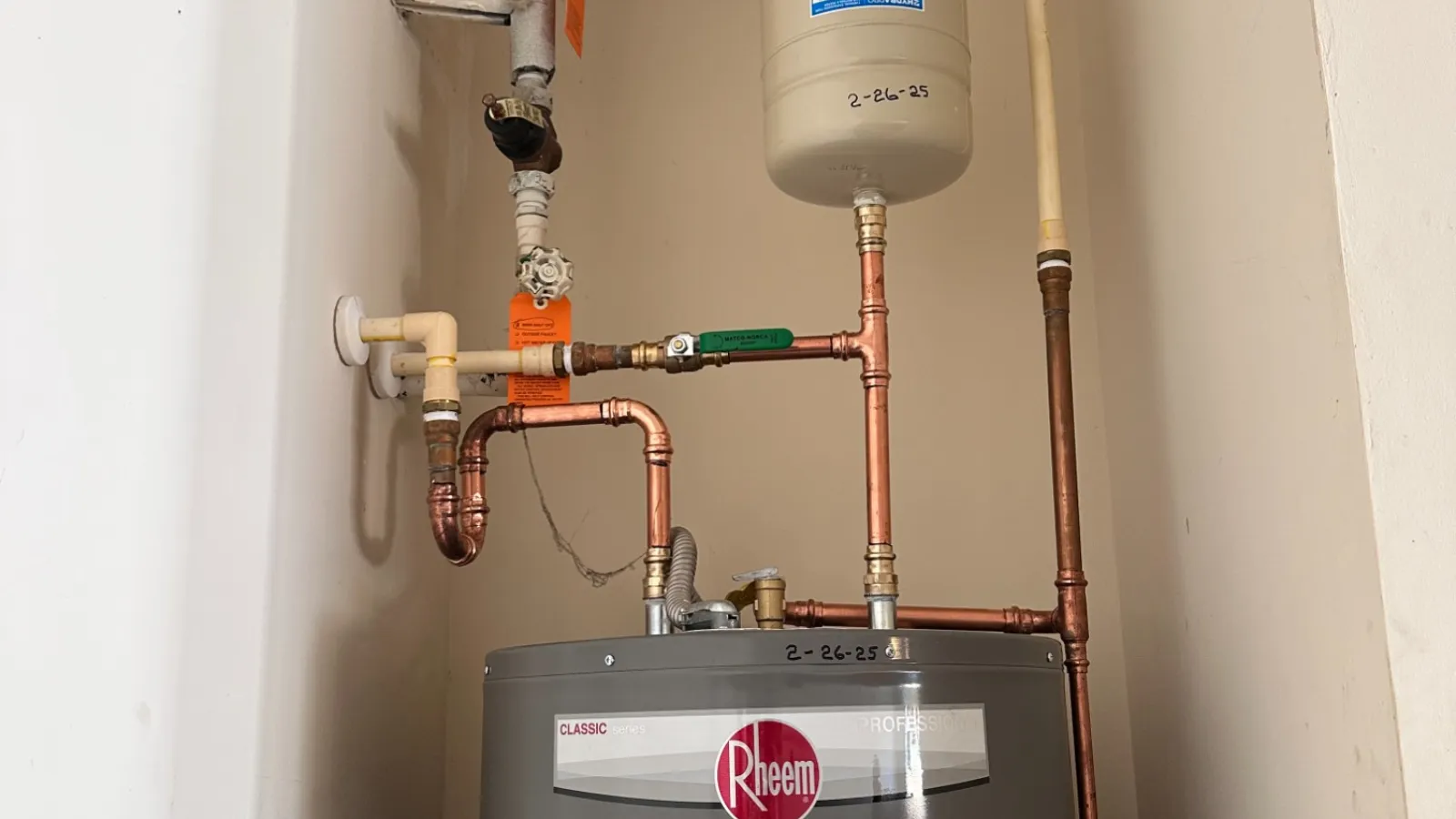
Even if the tank is still intact, internal components can fail at any time once they reach the end of their lifespan.
Common components that fail suddenly
- Heating elements can burn out and stop hot water production
- Thermostats can fail and prevent temperature control
- Gas valves or igniters can stop working completely
- Dip tubes can degrade and reduce hot water delivery
Because these parts are not visible, most homeowners do not notice any warning signs before failure occurs.
How Pressure and Demand Trigger Sudden Breakdowns
Water heaters are designed to operate within specific pressure and demand limits. When those limits are exceeded, weakened components can fail.
Common triggers include
- High water pressure putting stress on the tank and fittings
- Faulty or stuck temperature and pressure relief valves
- Heavy usage such as multiple showers at once
- Seasonal demand increases during colder weather
This is why many failures happen during busy mornings, holidays, or peak usage times.
How to Reduce the Risk of Sudden Water Heater Failure
While not all failures can be predicted, regular maintenance can significantly reduce the risk.
Steps that help protect your system
- Flush the tank annually to remove sediment
- Replace the anode rod every few years
- Monitor water pressure and keep it within a safe range
- Inspect the unit regularly for early signs of wear
- Schedule professional plumbing maintenance
Routine service from Estes Plumbing Services helps identify hidden issues before they lead to sudden failure.
Why Atlanta Homeowners Choose Estes Plumbing Services
When your water heater fails unexpectedly, you need a team that responds quickly and gets it right the first time.
At Estes Plumbing Services, we provide
- Fast scheduling and emergency service availability
- Transparent, upfront pricing before any work begins
- Family-owned service since 1949
- Experienced, background-checked technicians
- Full support for repair, replacement, and installation
We help you restore hot water quickly and make the right long-term decision for your home.
Schedule your water heater installation with Estes Plumbing Services today. Learn more about our Free estimates.
Frequently Asked Questions
Why did my water heater stop working overnight?
Most likely, internal wear reached a breaking point and caused a component or the tank itself to fail.
Can a water heater fail without warning signs?
Yes. Sediment buildup, corrosion, and component wear often happen inside the system and are not visible until failure occurs.
Does sediment always cause leaks?
Not always, but it increases the risk of overheating, metal fatigue, and internal damage.
How long do water heaters last before failure becomes more likely?
Most tank water heaters become higher risk after 8 to 12 years, depending on maintenance and water quality.
Should I replace my water heater before it fails?
Proactive replacement can help avoid leaks and water damage, especially if your system is older or showing reduced performance. Learn more about water heater replacement in Atlanta.
Protect Your Home From Unexpected Breakdowns
Water heater failures may feel sudden, but they are often the result of long-term wear. Understanding the causes can help you take action before a small issue turns into a major problem.
If your system is aging or not performing like it used to, our Estes Plumbing Team can help you evaluate your options and avoid unexpected downtime.
It's that easy. It's Estes.