
Commercial air conditioning systems are essential today. Offices, hospitals, retail stores, and large buildings rely on commercial cooling to maintain safe and comfortable indoor environments.
Modern air conditioning may seem common, but it is a relatively recent innovation. The air conditioning concept developed over centuries before becoming the advanced commercial air conditioning unit systems we use today.
At Estes Commercial, we continue that tradition. We deliver dependable commercial air conditioning systems designed for performance, comfort, and air conditioning energy efficiency.
Early Cooling Before Modern Air Conditioning
People have always searched for ways to create cool air.
In ancient Rome, water from aqueducts moved through walls to lower indoor temperatures. In China, hand fans were used thousands of years ago. Later, mechanical fans helped circulate air inside large rooms.
These early methods improved comfort. However, they did not truly cool air. They only moved it.
Real cooling requires removing heat and humidity. That process defines modern air conditioning.
Do Fans Create Cold Air?
No. Fans do not create cold air.
They move air across your skin and increase evaporation. This makes people feel cooler, but the room temperature does not change.
A commercial air conditioning unit works differently. It removes heat from the air and lowers the temperature inside the building. That is what allows commercial cooling systems to maintain reliable climate control in large office buildings and other facilities.
Building Design and Climate Control
Before central air conditioners were common, architects relied on design strategies to cool buildings.
They used:
• Cross-ventilation window placement
• Shaded areas to block sunlight
• Thick walls for insulation
• Landscaping to reduce heat gain
These techniques helped cool your home and other living spaces naturally. However, they could not maintain steady temperature control in larger commercial properties.
Businesses needed consistent cooling. That demand led to the development of commercial air conditioning systems.
The Birth of Commercial Air Conditioning
In the 1840s, Dr. John Gorrie proposed cooling hospital rooms to improve patient comfort. He built a machine that produced ice using compressed air.
Although his system was not commercially successful, it introduced mechanical refrigeration in the United States.
The real breakthrough came in 1902. Willis Carrier invented the first modern air conditioning unit. He created it to solve humidity problems in a printing plant. Excess moisture was damaging paper products.
Carrier's invention controlled both heat and humidity. This marked the beginning of modern air conditioning and the foundation of today's commercial air conditioners.
You can learn more about Carrier's history hereCommercial Air Conditioning Systems in the 20th Century
In the early 20th century, commercial air conditioning systems began appearing in public buildings.
The 1904 World's Fair introduced mechanical cooling to visitors. During the 1920s, movie theaters installed commercial cooling systems to attract customers during hot summers.
Early systems delivered uneven cooling. Over time, engineers improved air distribution to create balanced cool air throughout large spaces.
As technology improved, central air conditioners became common in office buildings across the United States. Residential systems followed, including window unit and room air conditioner models.
The air conditioning history of the 20th century shows how quickly AC systems transformed indoor comfort.
Air Conditioning Energy Efficiency Improvements
During the 1970s energy crisis, rising energy bills became a serious concern. Federal standards were introduced to improve air conditioning energy efficiency.
Today, the U.S. Environmental Protection Agency's ENERGY STAR® program sets guidelines for energy efficient air conditioner performance. ENERGY STAR certified commercial air conditioning systems meet strict efficiency standards and help reduce energy costs.
Learn more about ENERGY STAR requirements here:Modern commercial air conditioners now include:
• High-efficiency compressors
• Advanced refrigerants
• Variable-speed motors
• Smart building automation systems
• Improved airflow design
These features lower energy bills, reduce operating expenses, and improve long-term reliability.
Air conditioning energy efficiency is now a top priority for business owners seeking energy savings and lower energy costs.
Commercial Cooling Today
Today's commercial air conditioning solutions focus on:
• Reliable temperature control
• Reduced energy bills
• Lower energy costs
• Improved indoor air quality
• Consistent climate control
Modern AC systems are built to handle large commercial properties while delivering dependable performance.
Businesses rely on commercial cooling to protect equipment, maintain productivity, and ensure comfortable working environments.
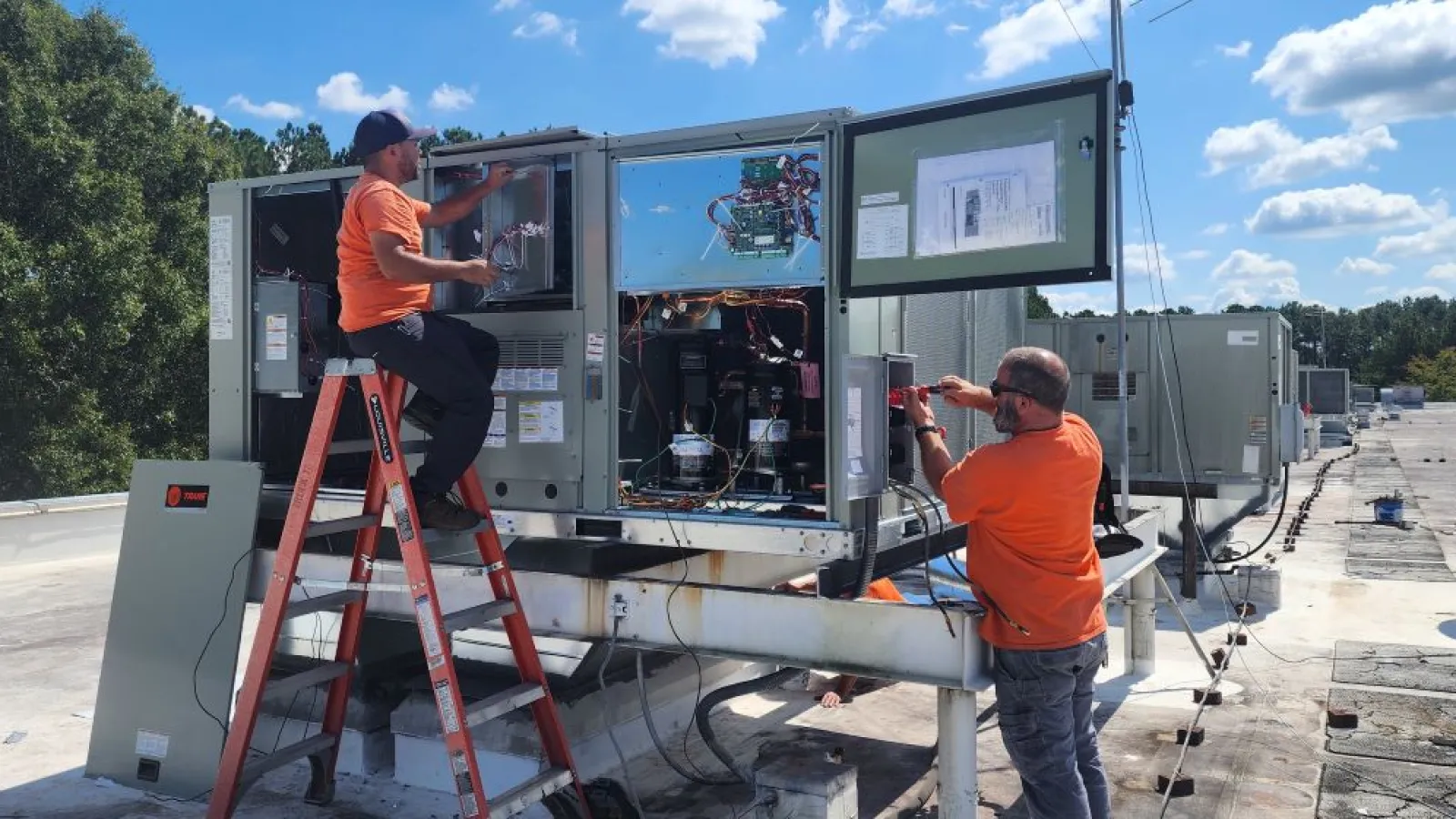
At Estes Commercial, we provide professional air conditioning solutions for office buildings and commercial properties across Metro Atlanta.
Learn more about our commercial HVAC services
Frequently Asked Questions About Commercial Air Conditioning
What are commercial air conditioning systems?
Commercial air conditioning systems are large-scale cooling systems designed to regulate temperature and humidity in office buildings, hospitals, retail centers, and other business facilities.
How is modern air conditioning different from early cooling methods?
Early cooling methods relied on fans and building design. Modern air conditioning systems remove heat and humidity using refrigeration technology, delivering consistent temperature control.
Why is air conditioning energy efficiency important?
Improved air conditioning energy efficiency reduces energy bills and lowers long-term operating costs. Efficient systems use less power while maintaining comfort.
What types of commercial air conditioners are available?
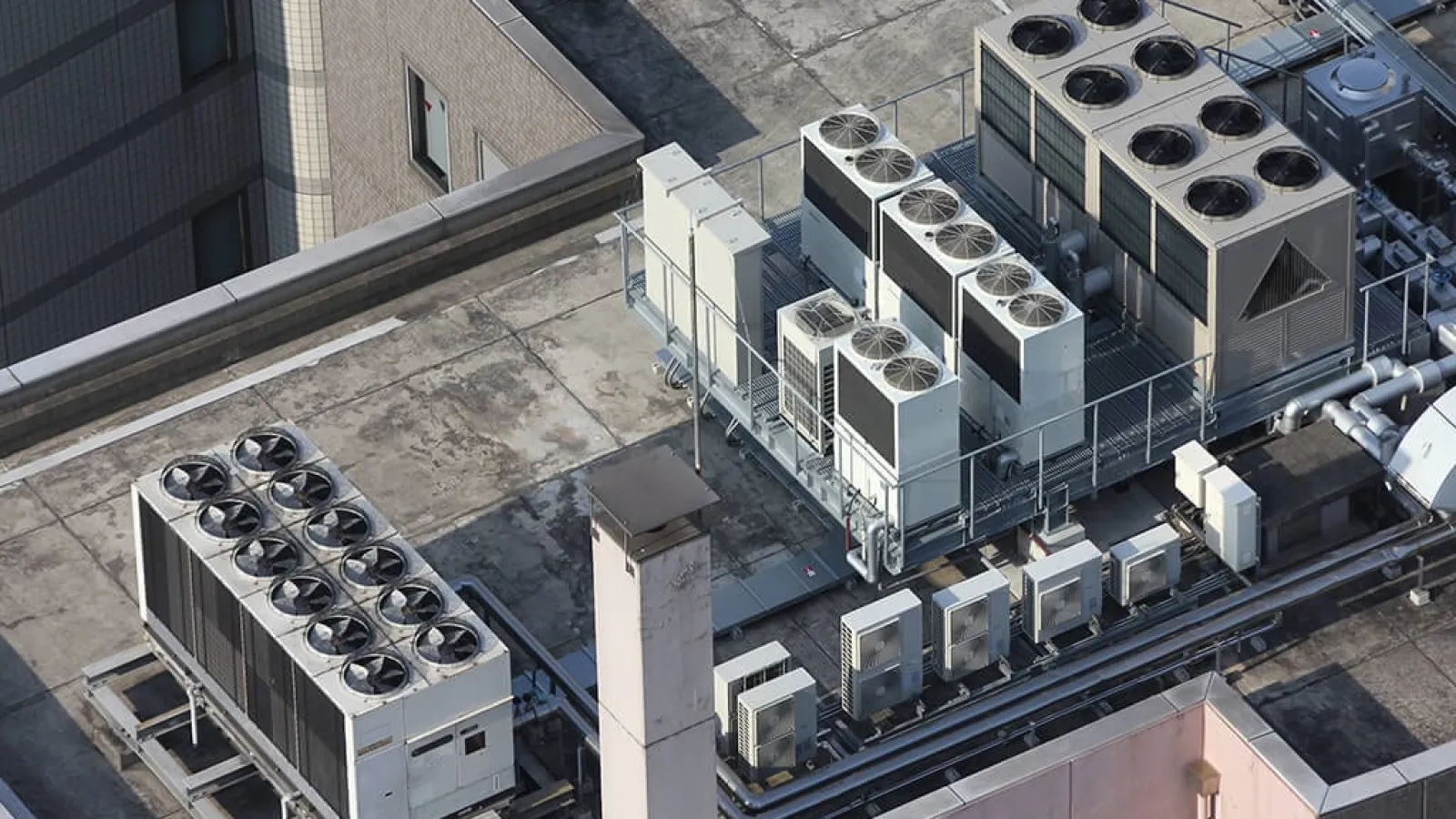
Commercial air conditioners include rooftop units, split systems, central air conditioners, and large-scale chillers.
When should a commercial air conditioning unit be replaced?
Replacement may be necessary if the unit:
• Requires frequent repairs
• Causes rising energy bills
• Cannot maintain proper temperature control
• Is 15-20 years old
Upgrading to modern air conditioning systems improves reliability and reduces operating expenses.
Commercial air conditioning has evolved from early cooling experiments to the advanced commercial air conditioning systems businesses depend on today. Reliable climate control is no longer a luxury. It is essential for productivity, equipment protection, and occupant comfort.
At Estes Commercial, we combine decades of expertise with modern air conditioning solutions designed to improve air conditioning energy efficiency, reduce operating costs, and deliver consistent performance. If your facility is ready to upgrade, optimize, or maintain its commercial cooling system, our team is prepared to help you move forward with confidence.