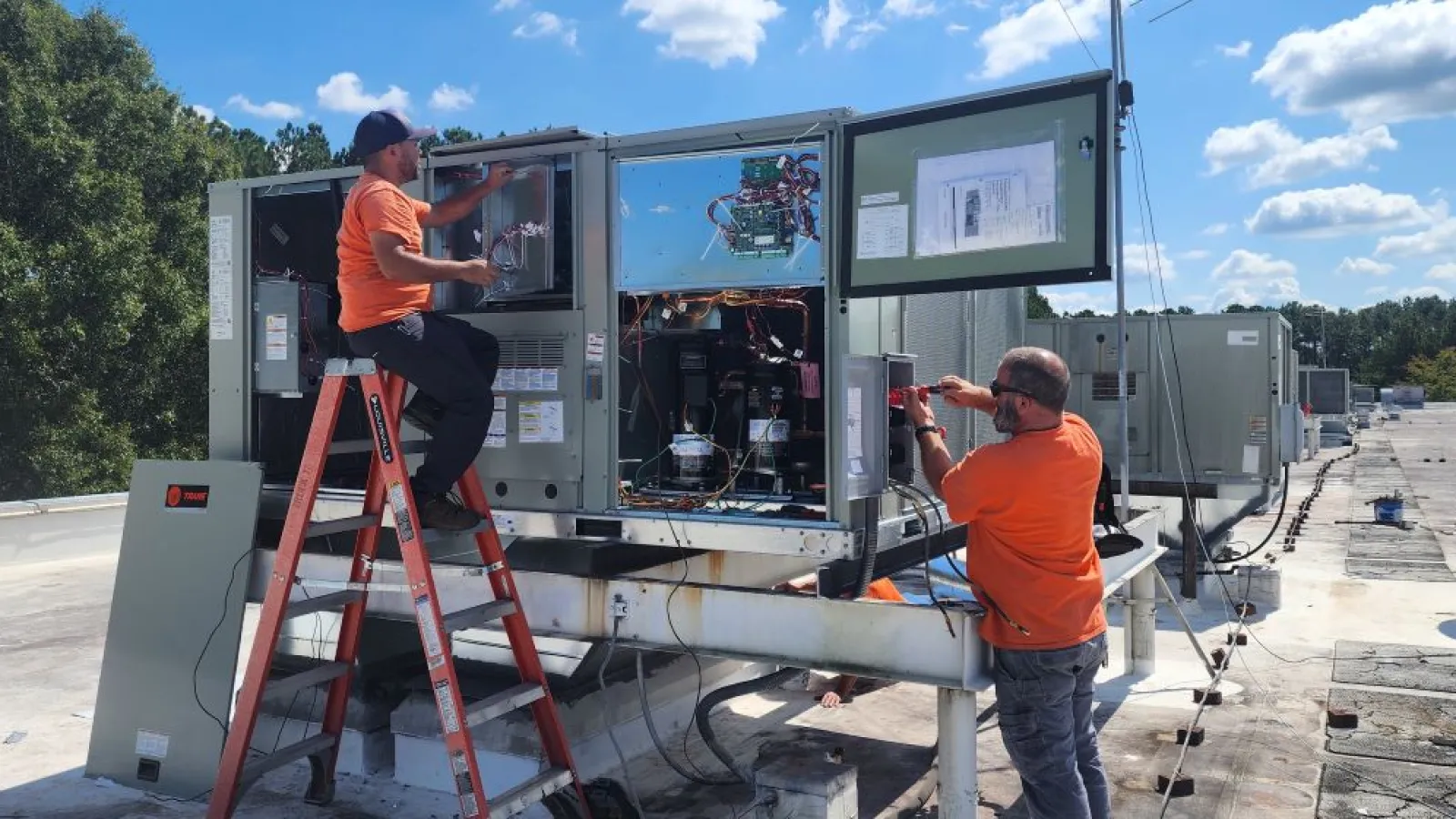

Commercial HVAC systems are the backbone of comfort and performance in office buildings, retail centers, healthcare facilities, and industrial properties. HVAC systems for commercial buildings not only heat and cool large indoor spaces, but also support indoor air quality, energy savings, and operational stability.
Without a structured commercial HVAC maintenance checklist, your heating and cooling systems can become inefficient, drive up energy bills, and lead to unexpected downtime.
At Estes Services, we provide professional commercial HVAC services across Metro Atlanta. Below is a comprehensive checklist to help protect your investment and keep your HVAC systems working efficiently year-round.
Why Commercial HVAC Maintenance Matters
Routine maintenance helps:
-
Reduce energy bills and utility costs
-
Extend equipment lifespan
-
Improve indoor air quality
-
Prevent emergency breakdowns
-
Keep your building efficiently heated or cooled
-
Maintain climate control during peak seasons
If your facility relies on complex commercial HVAC systems, preventative maintenance is a cost-effective, long-term strategy.
Learn more about our Commercial HVAC Services at EstesAir.com.
Commercial HVAC Maintenance Checklist for Heating Systems
Heating systems must be inspected before winter to ensure safe and reliable operation.
Inspect Furnaces and Heating Equipment
Your heating systems should be evaluated for:
-
Proper ignition and burner performance
-
Heat exchanger condition
-
Blower motor function
-
Electrical connections and safety controls
-
Airflow performance
These steps ensure your system transfers heat properly and distributes heated air evenly throughout your commercial building.
If upgrades are needed, explore our HVAC Installation Services for commercial properties.
Check Belts, Motors, and Moving Parts
Commercial HVAC units rely on motors, fans, and belts to move heated or cooled air.
Maintenance includes:
-
Inspecting belt tension and alignment
-
Lubricating bearings and motors
-
Replacing worn components
This reduces friction, improves system efficiency, and lowers the risk of breakdowns.
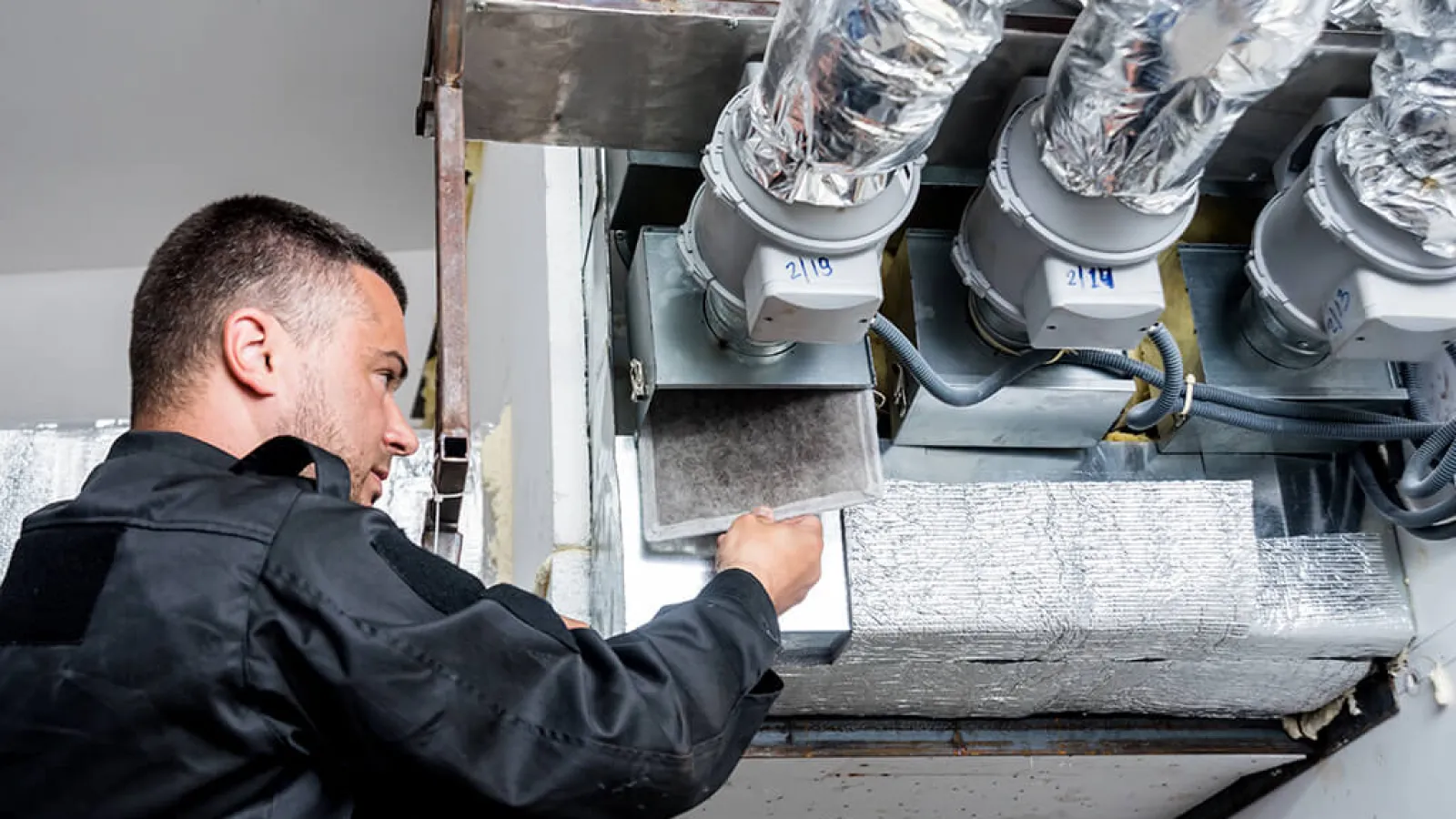
Replace and Inspect Air Filters
Dirty filters restrict airflow and reduce indoor air quality. Replacing filters regularly:
-
Improves air circulation
-
Protects heating and cooling systems
-
Reduces strain on equipment
-
Supports better energy efficiency
Proper filtration is critical in office buildings where occupancy levels are high.
Commercial HVAC Maintenance Checklist for Cooling Systems
Cooling systems require inspection before peak summer demand.
Inspect Condensing Units
Outdoor components should be:
-
Cleared of debris
-
Cleaned of dirt buildup
-
Checked for coil damage
-
Evaluated for airflow restrictions
Clean condenser coils allow your system to cool the air more effectively and reduce energy waste.
Check Refrigerant Levels
Refrigerant enables your HVAC systems to transfer heat and cool indoor spaces. Low refrigerant levels:
-
Reduce cooling capacity
-
Increase energy costs
-
Force compressors to work harder
Professional technicians test, adjust, and inspect for leaks to protect system performance.
Inspect Drain Lines and Evaporator Coils
Blocked drain lines can cause water damage and system shutdowns. Maintenance includes:
-
Cleaning drain pans
-
Clearing condensate lines
-
Cleaning evaporator coils
Clean coils improve heat transfer and system efficiency.
Indoor Air Quality and Climate Control Maintenance
Indoor air quality is critical for productivity and occupant comfort.
Inspect IAQ Components
Systems designed to control indoor air quality may include:
-
UV purification lights
-
Advanced filtration systems
-
Humidity control equipment
Replacing UV bulbs and maintaining filtration equipment ensures clean, healthy air circulation.
Evaluate Building Automation and Controls
Modern commercial HVAC systems often include smart controls to regulate temperature.
Maintenance includes:
-
Verifying system schedules
-
Adjusting seasonal settings
-
Calibrating thermostats
-
Ensuring automation systems respond properly
Optimized scheduling improves energy savings and keeps your commercial property cost effective.
Types of HVAC Systems That Require Maintenance
Different types of HVAC systems require specialized service. Estes Services maintains:
-
Rooftop packaged units
-
Centralized systems
-
Heat pump systems
-
Split HVAC systems
-
Ductless mini split systems
-
VRF systems
-
Geothermal systems
Ductless mini split systems and mini split systems are ideal for zoned commercial properties, but still require routine inspection to maintain airflow and efficiency.
Learn more about HVAC systems for commercial buildings at EstesAir.com.
When to Schedule Commercial HVAC Services
Most commercial properties should schedule maintenance:
-
Twice per year (spring and fall)
-
Quarterly for high-occupancy buildings
-
Monthly filter checks in larger facilities
Regular inspections ensure your HVAC unit heats and cools effectively while controlling humidity levels and operating costs.
Partner with a Commercial HVAC Expert
Commercial buildings require dependable commercial HVAC services performed by experienced professionals.
Estes Services provides:
-
Preventative maintenance plans
-
Emergency repairs
-
HVAC installation services
-
Full system replacements
-
Energy efficiency upgrades
We support commercial properties across Metro Atlanta including Midtown, Marietta, Roswell, Decatur, Kennesaw, and surrounding areas.
Schedule your commercial HVAC maintenance today at EstesAir.com.
It's That Easy. It's Estes.
Frequently Asked Questions About Commercial HVAC Maintenance
What is included in a commercial HVAC maintenance checklist?
A commercial HVAC maintenance checklist includes filter replacement, coil cleaning, refrigerant inspection, belt and motor testing, electrical safety checks, and indoor air quality evaluations.
How often should commercial HVAC systems be serviced?
Most HVAC systems for commercial buildings should be serviced at least twice per year. High-occupancy buildings may require more frequent inspections.
Why is indoor air quality important in commercial buildings?
Good indoor air quality improves comfort, reduces sick days, and supports productivity. Clean filters and ventilation systems help maintain healthy indoor environments.
What are the most common types of HVAC systems in commercial properties?
Common types of HVAC systems include rooftop packaged units, centralized air conditioning systems, split HVAC systems, heat pump systems, and ductless mini split systems.
How can commercial HVAC maintenance reduce energy bills?
Routine service keeps systems operating efficiently, reduces strain on equipment, and prevents energy waste. This lowers utility bills and improves long-term cost control.