
Atlanta's climate creates the perfect conditions for mold growth. High indoor humidity, warm air, and daily building activity can quickly lead to moisture buildup inside commercial spaces.
For business owners and facility managers, mold is not just a maintenance issue—it impacts operations, damages equipment, increases operating costs, and affects your indoor environment.
The right combination of indoor air quality solutions, commercial HVAC services, and routine commercial HVAC system tune-up strategies can significantly reduce mold risks while improving overall building performance.
Explore commercial HVAC solutions
Why Mold Forms in Commercial Buildings
Mold thrives in environments where moisture and poor ventilation exist.
In many commercial properties, excess moisture from the air combines with limited airflow, creating ideal conditions for mold growth. Common areas where mold develops include:
- Air handlers and evaporator coils
- HVAC ductwork and hvac ventilation systems
- Condensate drain pans and lines
- Storage areas and mechanical rooms
- Poorly ventilated indoor spaces
When your facility is not properly ventilated, moisture accumulates and reduces indoor air quality IAQ, leading to discomfort and long-term building damage.
How Commercial HVAC Systems Help Prevent Mold
Your commercial HVAC systems do more than heat and cool your building. They play a critical role in managing humidity, airflow, and contaminant control.
A well-maintained system helps:
- Maintain balanced indoor humidity levels
- Improve air circulation and airflow
- Deliver consistent fresh air
- Support healthier indoor environments
Below are the most effective HVAC-driven strategies for mold prevention.
1. Schedule Routine Commercial HVAC System Tune-Ups
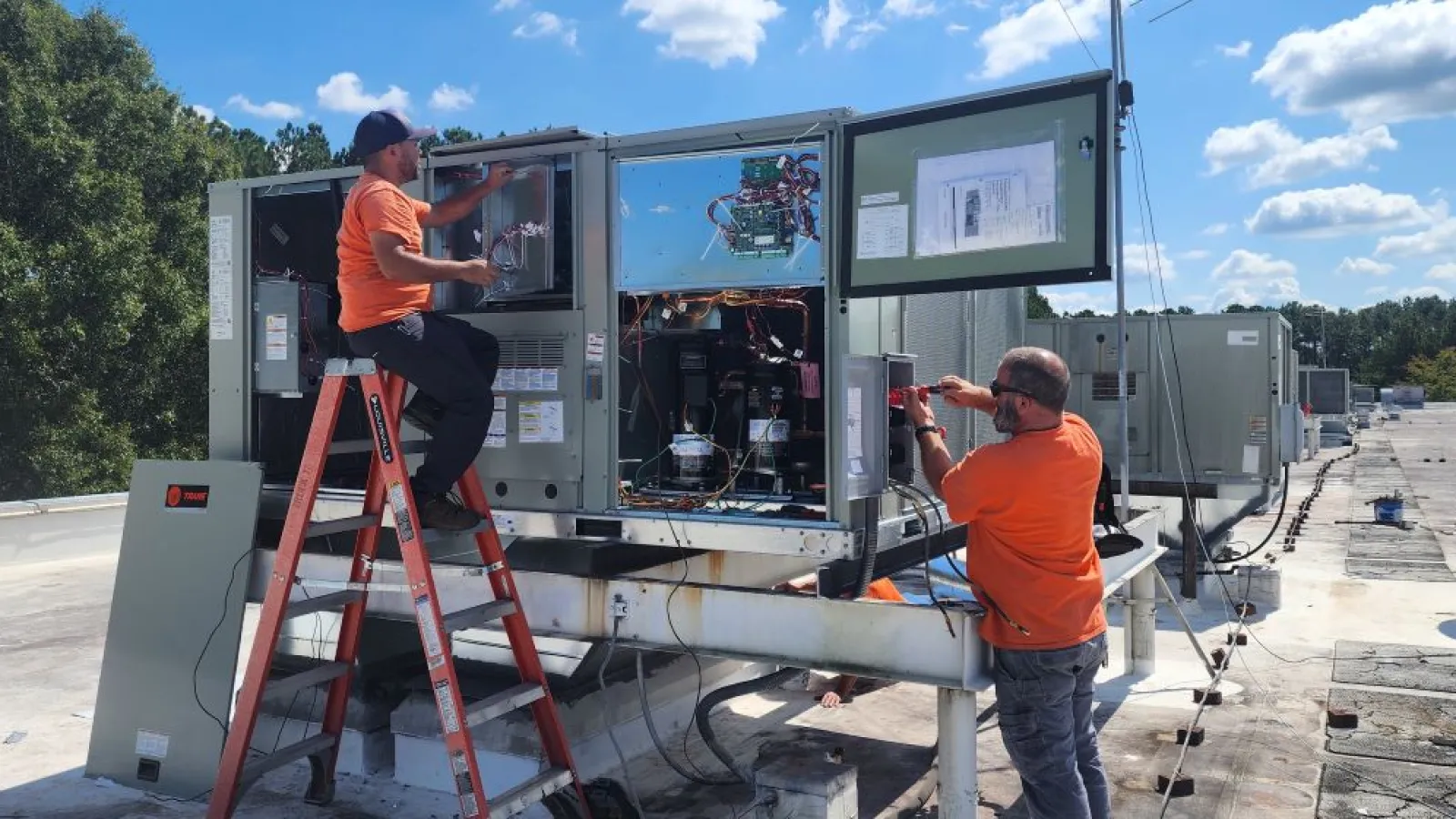
A regular commercial HVAC system tune-up is one of the most important steps to prevent mold.
During a tune-up, technicians:
- Inspect air handlers and evaporator coils
- Clear condensate drains and remove moisture buildup
- Check airflow and system balance
- Evaluate ductwork and ventilation systems
- Ensure proper temperature control
These actions help your system remove moisture from the air, maintain efficiency, and reduce mold risks before they start.
2. Install Commercial Dehumidification Systems
In high-humidity environments, standard HVAC alone is not enough.
Commercial dehumidification systems are essential for controlling excess moisture and maintaining stable indoor humidity.
These systems help:
- Remove excess humidity from indoor spaces
- Maintain optimal humidity levels (30-50%)
- Improve indoor air quality
- Reduce strain on heating and cooling systems
- Lower long-term operating costs
They are especially effective in facilities such as restaurants, gyms, healthcare buildings, and large office spaces.
3. Improve Indoor Air Quality with Advanced IAQ Solutions
To improve indoor air quality, businesses should integrate advanced indoor air quality equipment into their HVAC systems.
The best indoor air quality solution often includes:
- High-performance air filters
- UV air purification systems
- Commercial-grade air purifier technology
- Continuous airflow monitoring
These systems reduce exposure to indoor air pollutants, including dust, bacteria, and volatile organic compounds (VOCs).
Cleaner air leads to a healthier indoor environment and improved comfort for employees and customers.
4. Strengthen HVAC Ventilation Systems and Airflow
Proper hvac ventilation systems are critical to mold prevention.
Without adequate airflow, moisture and heat become trapped, increasing humidity levels and mold risk.
Improving ventilation helps:
- Circulate fresh air throughout the building
- Reduce excess humidity
- Maintain balanced indoor conditions
- Support efficient heating and cooling systems
Solutions may include upgrading ductwork, adjusting airflow, or integrating additional ventilation strategies.
5. Monitor Indoor Humidity and Conditions in Real Time
Maintaining optimal indoor conditions requires ongoing monitoring.
Modern HVAC systems can track:
- Indoor humidity levels
- Temperature changes
- Air quality metrics in real time
This allows facility managers to respond quickly to moisture issues and maintain a properly controlled indoor environment.
Why Mold Prevention Matters for Your Business
Ignoring mold risks can lead to serious consequences for your commercial building.
Without proper HVAC management, businesses often face:
- Increased energy costs and higher energy bills
- Poor indoor air quality and occupant discomfort
- Damage to building materials and equipment
- Reduced productivity and customer satisfaction
- Health concerns linked to indoor air pollutants
Proactive HVAC strategies are a cost-effective way to protect your building and maintain performance over time.
Protect Your Commercial Space with Estes Services
For more than 77 years, Estes Services has supported Atlanta businesses with advanced commercial HVAC services and customized indoor air quality solutions.
We specialize in:
- Commercial HVAC system tune-ups
- IAQ testing and system upgrades
- Commercial dehumidification systems
- Ventilation improvements
- Preventive maintenance programs
Our team designs solutions that improve efficiency, reduce risk, and maintain optimal conditions across your commercial building.
Schedule your consultation today
📞 (404) 362-6960
🌐 estesair.com
FAQS
How do commercial HVAC systems prevent mold?
Commercial HVAC systems control temperature, airflow, and indoor humidity, which are key factors in preventing mold growth.
Why is a commercial HVAC system tune-up important?
A commercial HVAC system tune-up ensures your system removes moisture effectively, maintains airflow, and prevents conditions that lead to mold.
What is the best indoor air quality solution for mold control?
The best indoor air quality solution combines dehumidification, air purification, proper ventilation, and regular HVAC maintenance.
Do commercial dehumidification systems help reduce mold?
Yes. Commercial dehumidification systems remove excess moisture from the air and maintain balanced humidity levels, reducing mold risk.
How can I improve indoor air quality in my building?
To improve indoor air quality, use air filters, air purifiers, proper ventilation, and maintain your HVAC system regularly.
What humidity level prevents mold growth?
Maintaining indoor humidity levels between 30% and 50% helps prevent mold and supports a healthy indoor environment.
Can poor ventilation cause mold in commercial buildings?
Yes. Without proper hvac ventilation systems, moisture builds up and creates conditions for mold growth.