
Commercial HVAC Energy Regulations: What Atlanta Businesses Need to Know
In 2018, the Department of Energy introduced updated energy efficiency regulations for commercial HVAC equipment. These rules apply across the united states and affect how commercial HVAC systems are designed, installed, and replaced.
For Atlanta businesses, these updates are especially important when planning upgrades to commercial air conditioning, rooftop units, or heat pump systems.
Understanding these changes helps you stay compliant. It also helps reduce energy bills, control operating costs, and improve long term system performance.
New Commercial HVAC Energy Regulations Explained
The updated energy efficiency requirements apply to new installations and replacement systems. Every new system must meet minimum efficiency standards.
These regulations were introduced in phases. The first phase began in 2018, followed by additional updates in 2023.
The Department of Energy aligned these standards with ASHRAE benchmarks. These updated energy efficiency standards reflect real system performance, not just peak output.
What Is Integrated Energy Efficiency Ratio (IEER)?
The integrated energy efficiency ratio measures how HVAC systems perform during real operation.
Older efficiency ratings focused only on peak output. IEER evaluates performance across a range of conditions.
This includes:
- Partial load performance
- Changes in outdoor air
- Daily building demand
Since most systems do not run at full capacity all day, IEER provides a more accurate view of how spaces are heated or cooled.
For facility managers, this means better visibility into actual energy use and long term costs.
DOE IEER Requirements by System Size
The DOE sets IEER standards based on system size.
Current benchmarks include:
- 6 to 10 ton systems minimum 12.9 IEER
- 11 to 20 ton systems minimum 12.4 IEER
- 21 to 63 ton systems minimum 11.6 IEER
These values vary by system type, including split systems and packaged rooftop units.
Meeting these standards ensures your system operates efficiently and meets federal requirements.
How Modern HVAC Systems Meet These Standards
Manufacturers have improved commercial HVAC equipment to meet higher efficiency levels.
Modern systems include:
- Variable speed fans
- Advanced compressors
- High efficiency heat exchangers
- Smart control systems
- Improved air handlers
These upgrades reduce energy losses and improve the delivery of conditioned air and cooled air throughout the building.
The Role of Heat Pump Systems
A pump system, such as air source heat pumps or geothermal heat pumps, improves efficiency by moving heat instead of creating it.
This approach uses less energy and adjusts to outdoor air conditions.
The heating seasonal performance factor measures how these systems perform in heating mode.
Heat pump systems are now a key part of modern HVAC strategies for commercial buildings.
What These Regulations Mean for Atlanta Businesses
For business owners and facility teams, these regulations create both responsibility and opportunity.
High efficiency systems may require a higher upfront investment. However, they deliver long term benefits.
These include:
- Lower utility bills
- Reduced operating costs
- Improved system reliability
- Better indoor air quality
DOE estimates show that upgraded systems can save between $4,000 and $10,000 over the life of a unit.
Installation and Building Considerations
High efficiency systems may require design adjustments.
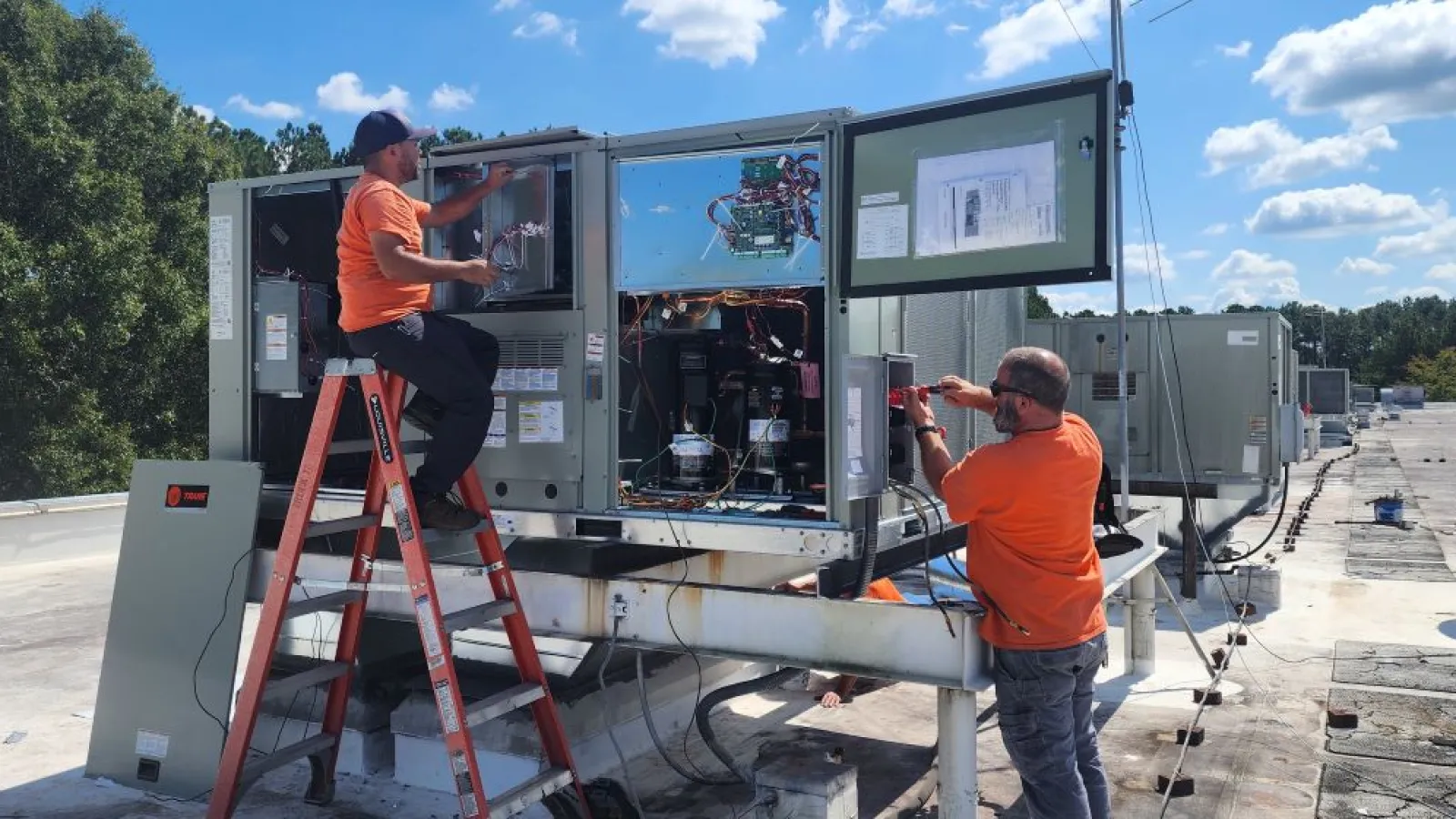
For rooftop installations, this can include:
- Additional structural support
- More space for equipment
- Planning for installation access
A professional evaluation ensures your building can support the system and meet compliance standards.
Importance of Regular Maintenance
Even the most efficient system requires regular maintenance.
Routine service helps:
- Maintain efficiency
- Prevent breakdowns
- Extend equipment life
- Keep air filters clean
Without maintenance, systems lose performance and increase energy costs.
Planning HVAC Upgrades
HVAC upgrades should be planned in advance.
Consider upgrading when:
- Energy bills increase
- Repairs become frequent
- Performance declines
- Equipment no longer meets standards
Planning ahead helps avoid downtime and supports better financial decisions.
Commercial HVAC Services for Atlanta Facilities
Estes Services provides expert commercial HVAC services for businesses across Metro Atlanta.
Our team supports:
- System design aligned with current standards
- Installation of high efficiency systems
- Maintenance programs for long term performance
- Evaluation of building and equipment needs
Explore our services
Frequently Asked Questions
Why is IEER more important than older efficiency ratings
IEER measures real performance. It reflects how systems operate during daily use, not just peak output.Do DOE standards apply to replacement equipment
Yes. Any new or replacement system must meet current energy efficiency requirements.Do existing systems need to be replaced
No. Existing systems can remain in place, but future replacements must meet updated standards.Do high efficiency systems cost more
Yes, upfront costs may be higher. However, lower energy use and reduced repairs often offset this investment.How do these standards reduce energy bills
Systems with higher IEER ratings use less energy during normal operation, which lowers monthly costs.Are incentives available for upgrades
Some programs may offer incentives. Consult your HVAC provider and financial advisor for details.When should a business plan an upgrade
Plan upgrades before system failure to avoid downtime and control costs.Ensure your facility is aligned with today's energy standards and built for long term performance.
Estes Services delivers expert commercial HVAC services backed by decades of experience supporting Atlanta businesses. From system design and installation to maintenance and performance optimization, our team provides complete solutions for every stage of your HVAC lifecycle.
Partner with Estes Services as your trusted expert for all your commercial HVAC needs and schedule your consultation today.