
Benefits of Commercial AC Maintenance
Spring has arrived in Atlanta, bringing warmer temperatures and increased demand for cooling across every commercial building. After months of inactivity, your commercial air conditioner must be properly prepared to ensure it runs efficiently and reliably.
A proactive approach through commercial AC maintenance and structured commercial HVAC maintenance services helps your system operate smoothly, reduce energy consumption, and avoid costly breakdowns during peak demand.
Preparing your commercial air conditioning system now ensures your business maintains comfort, controls operational costs, and protects your HVAC investment long term.
Steps to Take Before Starting Your Commercial Air Conditioner in the Spring
Before activating your commercial HVAC systems, it is critical to complete essential maintenance tasks to ensure proper performance and efficiency.
1. Commercial HVAC Preventive Maintenance Tune Up
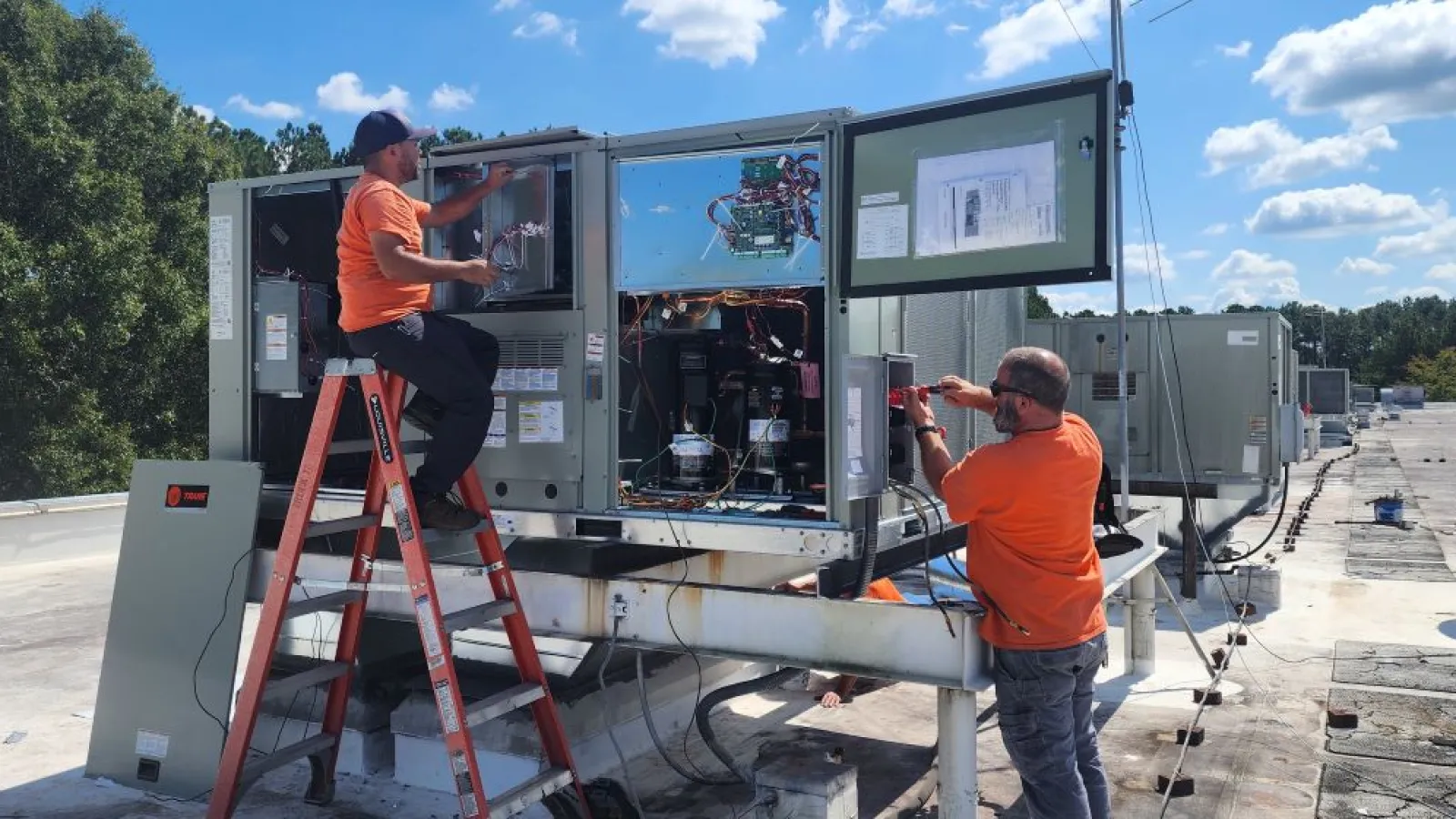
Professional commercial HVAC maintenance is essential to keep your system running smoothly.
A seasonal tune up ensures your HVAC equipment is inspected, cleaned, and optimized before heavy use.
During a tune up, an experienced technician will:
- Inspect system components including air handlers and air conditioners
- Evaluate system efficiencies and performance
- Identify wear and tear that could lead to breakdowns
- Ensure proper airflow and air supply throughout the building
Routine commercial HVAC maintenance services help reduce energy consumption, extend equipment lifespan, and lower repair services costs.
For ongoing care, consider a customized HVAC service agreement or commercial HVAC maintenance plan designed around your facility's needs.
2. Change Air Filters
Clean air filters are critical for maintaining proper airflow and indoor air quality.
Over time, filters collect dust and contaminants that restrict air supply, forcing your system to work harder and increasing utility bills.
Replacing filters regularly helps:
- Improve airflow across your system
- Reduce strain on HVAC components
- Maintain healthy ventilation and air conditioning performance
- Support better indoor air quality
This simple step plays a major role in improving system performance and reducing energy consumption.
3. Clean Equipment Components
Your outdoor unit, whether part of a split system or heat pump, is exposed to debris during off months.
Before starting your commercial air conditioning system, clean key components such as:
- Outdoor condenser coils
- Vents and airflow pathways
- Surrounding areas blocking ventilation
Removing debris allows proper heat exchange and ensures your system can operate efficiently.
This step helps improve system efficiencies, reduce strain, and prevent unnecessary HVAC repair services.
4. Adjust Thermostat Programs
Modern commercial HVAC systems often include automation or programmable controls to manage cooling efficiently.
Before startup:
- Adjust temperature settings for cooling season
- Align schedules with building occupancy
- Reduce cooling in unused areas
These adjustments help reduce energy consumption, lower operational costs, and maintain comfort without overworking your system.
5. Address Repair Needs Early
Any unresolved issues from previous seasons should be addressed before startup.
Ignoring small problems can lead to:
- Unexpected breakdowns
- Higher repairs cost
- Reduced system performance
- Increased energy consumption
Review system performance and schedule HVAC repair services if needed.
Routine inspections as part of your commercial HVAC maintenance plan help detect problems early and keep your system running smoothly.
Why Commercial HVAC Maintenance Matters
Investing in commercial AC maintenance delivers measurable benefits for your business.
Proper maintenance helps:
- Reduce energy consumption and lower utility bills
- Improve system reliability and performance
- Extend the lifespan of HVAC equipment
- Maintain consistent indoor comfort
- Prevent costly emergency repairs
A structured commercial HVAC maintenance plan is one of the most cost effective ways to protect your building systems and ensure long term performance.
Prepare for Cooling Season with Estes Services
For over 77 years, Estes Services has supported businesses across Atlanta with expert commercial HVAC maintenance services, system optimization, and repair solutions.
Our team helps you:
- Optimize performance of your commercial air conditioning system
- Reduce energy consumption and operating costs
- Implement tailored commercial HVAC maintenance plans
- Access priority service and expert diagnostics
Ensure your system is ready to perform when your business needs it most.