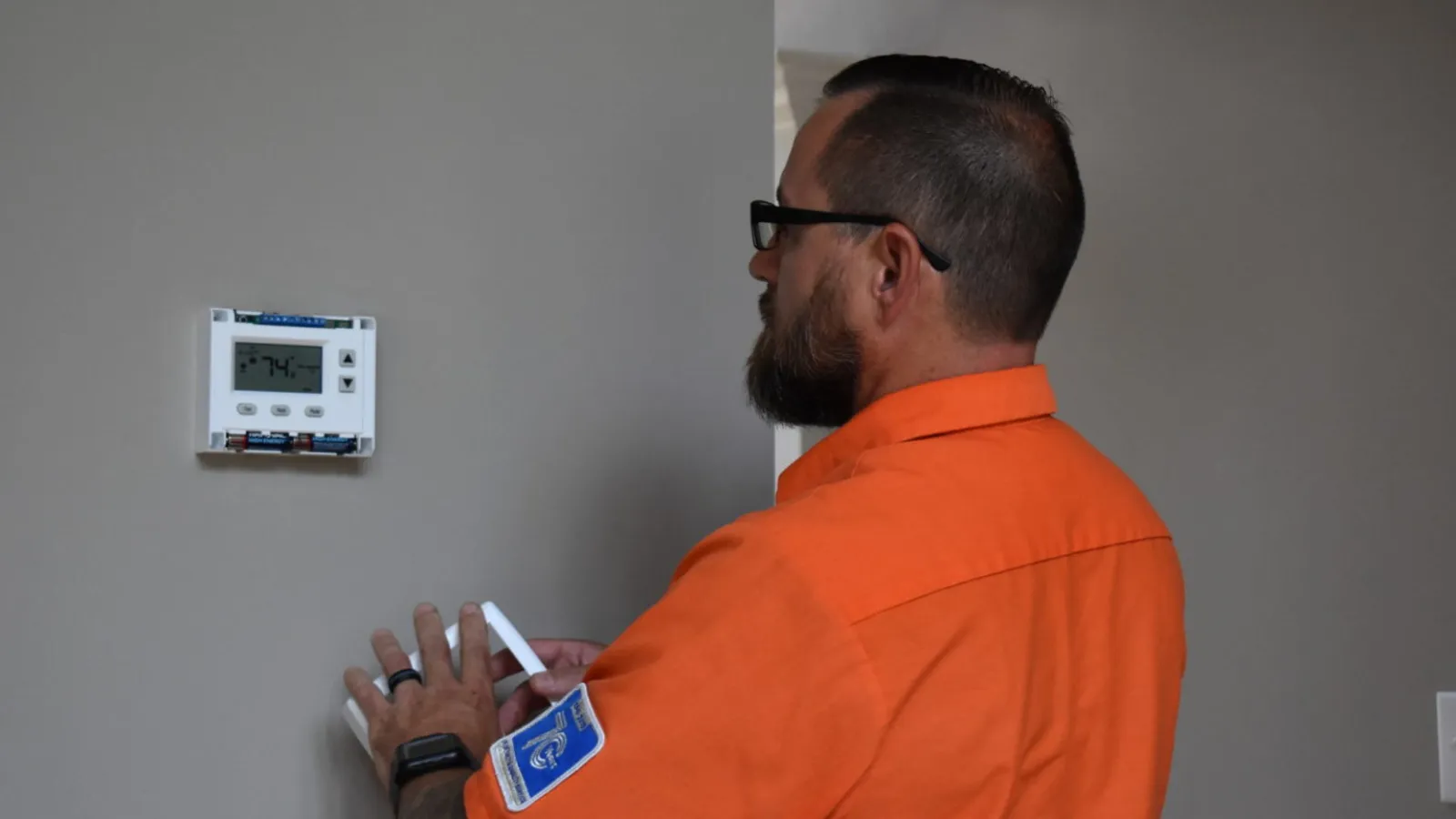

How to Test Your Thermostat for Accuracy in Your Atlanta Home
Thermostat accuracy is essential for maintaining year-round comfort and energy efficiency in your home. When a thermostat delivers incorrect temperature readings, your HVAC system may run longer than necessary, waste energy, and create inconsistent comfort throughout your living spaces. Unfortunately, thermostat inaccuracy is more common than many homeowners realize.
In this guide, Estes Services explains how to test your thermostat for accuracy, how to correct minor issues, and when it's time to call a licensed HVAC technician for thermostat installation, calibration, or replacement.
If you need thermostat or HVAC system service, schedule an appointment
Why Thermostat Accuracy Matters
Your thermostat serves as the central communication point between your HVAC equipment and the temperature needs of your home. When thermostat accuracy drifts even by a few degrees your heating and cooling systems may:
-
Produce unnecessary warm air or cool air
-
Increase overall energy consumption
-
Run longer cycles, leading to higher utility bills
-
Create inconsistent temperatures across indoor environments
-
Compromise indoor air quality equipment performance
-
Strain components like air handlers and indoor units
Ensuring thermostat accuracy and efficiency helps your HVAC system operate at peak performance while protecting your long-term investment.
Tools You Need to Test Thermostat Accuracy
You can test your thermostat at home using basic household items:
-
Tape
-
A soft paper towel or paper napkin
-
A standard glass tube thermometer
These items allow you to isolate temperature readings without interference from wall surfaces or airflow obstructions.
How to Test Your Thermostat for Accuracy
Follow these steps to determine whether your thermostat is reading indoor temperatures correctly.
Step 1 - Select the Right Location
Choose a spot a few feet away from your thermostat. Ensure the area:
-
Receives no direct sunlight
-
Is away from heat sources like lamps
-
Is not near windows, doors, or vents
-
Represents actual indoor temperature and humidity levels
Step 2 - Position Your Thermometer Correctly
-
Place a folded paper towel against the wall.
-
Set your thermometer against the paper towel.
-
Tape the thermometer in place at the same height as your thermostat.
The layer of paper helps prevent heat transfer from the wall, ensuring a more accurate reading.
Step 3 - Compare Temperature Readings
Leave the thermometer in place for 20 minutes, then:
-
Record the thermometer reading
-
Compare it to your thermostat reading
If readings match:
Your thermostat accuracy is within normal range.
If readings differ by 3 degrees or less:
This slight variance is acceptable, but cleaning may help.
If readings differ by more than 3 degrees:
Your thermostat may need recalibration, maintenance, or replacement.
What to Do If Your Thermostat Is Inaccurate
If your thermostat readings are noticeably off, try the following DIY steps before calling a technician:
Clean the Thermostat
Dust and debris can affect internal sensors and wiring.
-
Remove the cover
-
Use a soft brush or compressed air to clean vents and contact points
-
Replace thermostat batteries if applicable
Repeat the 20-minute test once cleaning is complete.
Reevaluate Thermostat Placement
Incorrect placement can reduce accuracy. A thermostat should not be located:
-
Near drafty windows
-
In direct sunlight
-
Close to kitchens
-
Near heat-producing appliances or electronics
If placement is the issue, a licensed HVAC technician should reposition the thermostat safely.
Call a Trusted HVAC Technician
If your thermostat still displays inconsistent readings, it's time to involve a professional.
A certified HVAC technician can:
-
Recalibrate the thermostat
-
Inspect internal wiring
-
Evaluate communication with HVAC equipment
-
Recommend thermostat installation if replacement is needed
Explore thermostat and indoor air quality upgrade options
When to Consider New Thermostat Installation
If your thermostat cannot be recalibrated or repaired, replacement is the most cost-effective solution. Upgrading to a modern thermostat improves:
-
HVAC efficiency
-
Temperature and humidity control
-
Indoor comfort
-
Energy savings
-
Long-term equipment performance
Estes Services installs professional-grade thermostats designed for accuracy and long-term reliability. Learn more about thermostat installation
Thermostat Installation and Service in Atlanta
Whether you need thermostat repair, recalibration, or full replacement, Estes Services delivers expert service backed by more than 75 years of HVAC experience. Our technicians ensure your thermostat and HVAC equipment work together seamlessly—keeping your home comfortable and energy-efficient throughout the year.
Schedule service or request a thermostat evaluation
FAQs About Thermostat Accuracy
What causes thermostat inaccuracy?
Dust buildup, electrical issues, poor placement, or aging sensors can all interfere with thermostat accuracy and efficiency.
How often should I test my thermostat?
Test it once per year—ideally before heating and cooling seasons—to ensure optimal performance of your heating and cooling systems.
Can I recalibrate my thermostat myself?
Basic cleaning helps, but precise calibration should be handled by a licensed HVAC technician to prevent wiring damage.
Will an inaccurate thermostat increase my energy bills?
Yes. Incorrect temperature readings can cause longer HVAC cycles, increased energy consumption, and unnecessary strain on your HVAC equipment.
When should I replace my thermostat?
Replace the thermostat if it cannot hold accurate readings, has wiring problems, or is outdated and no longer compatible with newer HVAC systems.