
For building owners and facility managers, understanding commercial HVAC cost is an important part of planning budgets. A well-designed commercial HVAC system keeps a commercial building comfortable and operating smoothly throughout the year.
Modern heating and cooling systems regulate indoor temperature, improve airflow, and help improve indoor air quality. These systems are essential for offices, restaurants, healthcare facilities, and retail spaces.
Many buildings rely on a central air conditioner, rooftop units, or a heat pump system to manage indoor comfort. Regardless of the system type, reliable climate control supports productivity and customer experience.
However, HVAC system pricing can vary widely. Equipment size, system type, building layout, and installation complexity all influence the total cost of a commercial HVAC system replacement.
This guide explains what affects commercial HVAC systems, how pricing works, and how commercial HVAC maintenance helps reduce long-term costs.
Learn more about commercial HVAC services
What Determines Commercial HVAC System Pricing?
Several factors influence the cost of installing or replacing a heating and air conditioning unit in a commercial property.
Key factors include:
• Equipment brand and quality
• Type of HVAC system installed
• Installation complexity and labor costs
• Size of the commercial building
• Business activity and occupancy levels
Understanding these factors helps business owners choose the most cost effective HVAC solution for their facility.
HVAC Equipment Brands and System Quality
Many commercial contractors install equipment from trusted manufacturers with strong performance records.
For example, many businesses rely on Carrier commercial HVAC systems, which are widely used in commercial buildings. Carrier equipment is known for strong performance, durable components, and energy-efficient design.
Other manufacturers commonly used in commercial HVAC systems include:
• Mitsubishi
• Trane
• Lennox
• Aaon
• Honeywell
Selecting high-quality equipment can reduce repair costs and improve long-term energy savings.
The Type of HVAC System
The types of HVAC systems installed in commercial buildings depend on building size and layout.
Common systems include:
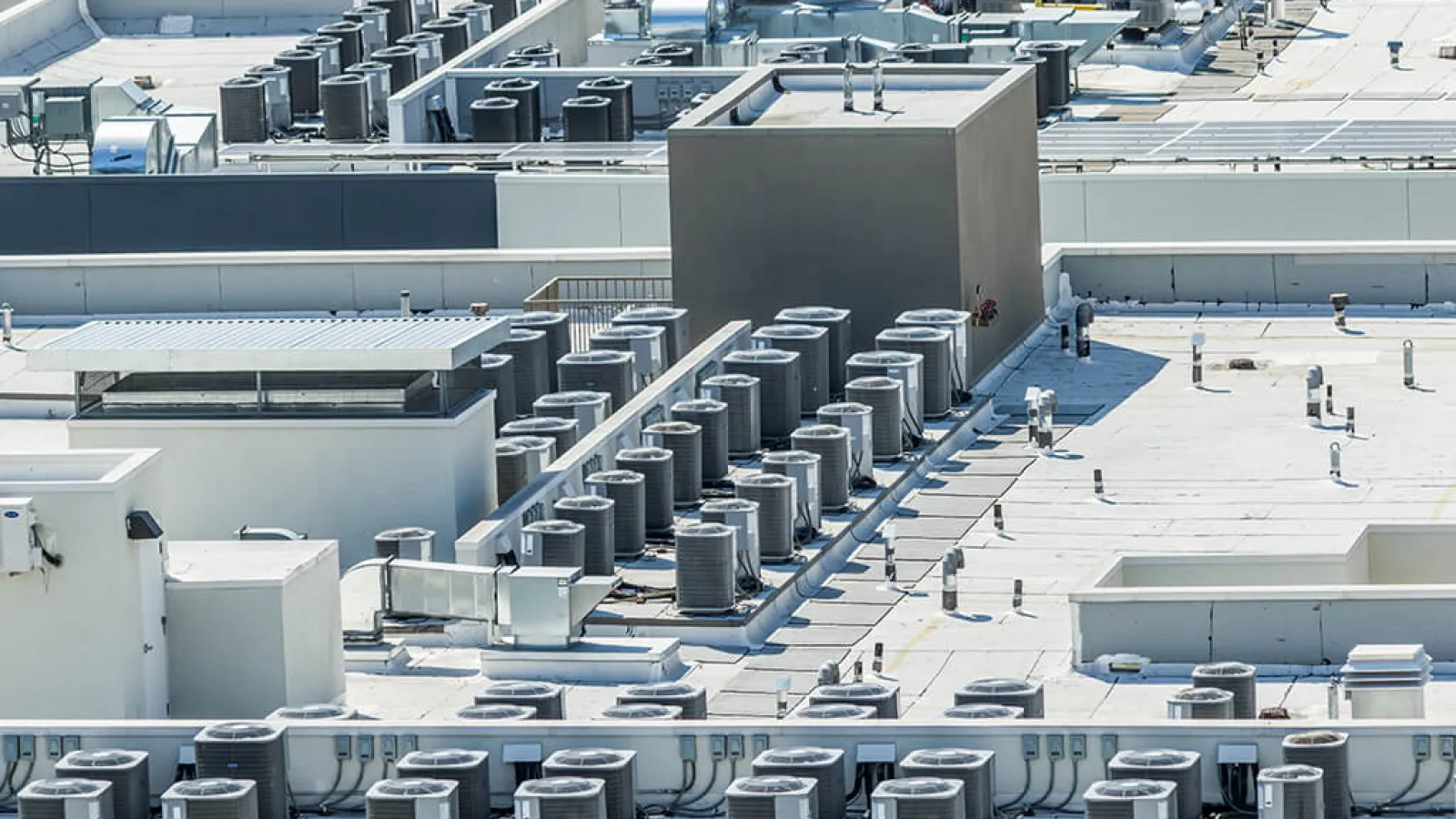
• Rooftop HVAC units
• Split air conditioning systems
• Variable refrigerant flow systems
• Mini split systems
• Heat pump systems
Each system type has different installation requirements and HVAC system pricing levels.
Smaller buildings may only require a split air conditioning system with indoor air handlers and outdoor condensers. Larger buildings often rely on several HVAC units connected to centralized cooling systems.
A professional inspection helps determine the most appropriate system for the building.
Variable Air Volume Systems (VAV)
Variable Air Volume systems adjust airflow based on temperature needs in different zones of the building.
Instead of operating at one fixed speed, these systems increase or decrease airflow automatically. This improves temperature control, lowers energy bills, and increases system efficiency.
VAV systems are commonly used in office buildings, hospitals, and large commercial facilities.
Constant Air Volume Systems (CAV)
Constant Air Volume systems deliver a steady airflow throughout the building.
These systems typically include an indoor air handler and an outdoor AC unit or central air conditioner.
CAV systems generally cost less to install, but they may use more energy than variable systems.
Variable Refrigerant Flow Systems (VRF)
Variable Refrigerant Flow systems circulate refrigerant through piping rather than pushing air through ductwork.
This design allows different rooms to heat or cool separately. VRF systems give building managers greater control over temperature and energy use.
These systems are common in modern commercial buildings that require flexible temperature control.
Installation Difficulty and Labor Costs
Installation requirements can significantly affect commercial HVAC system replacement costs.
Some installations require additional labor due to:
• Limited roof access
• Historic building construction
• Custom ductwork design
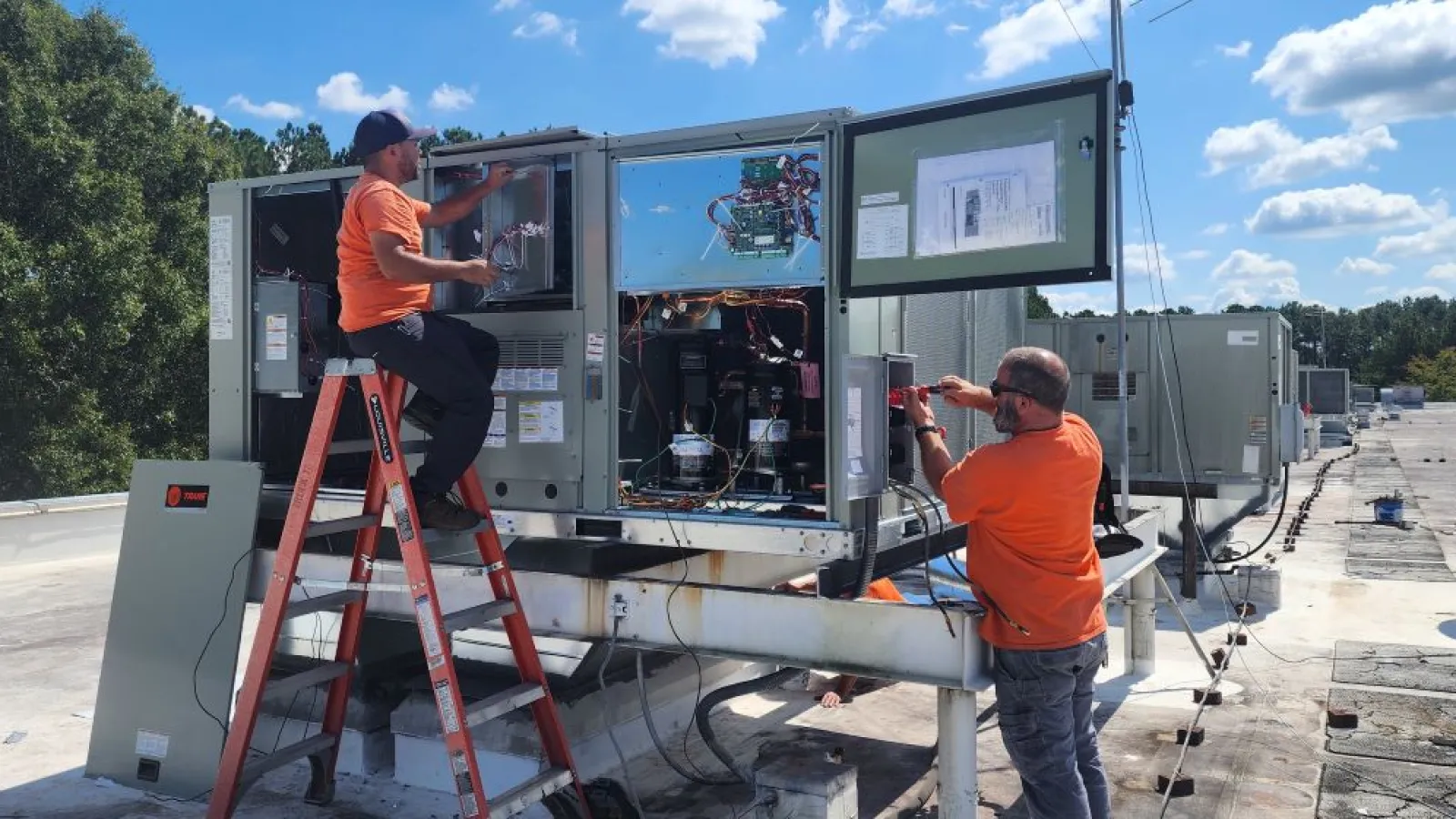
• Crane equipment for rooftop units
Older buildings may also require upgrades to support modern ventilation and air conditioning equipment.
Professional commercial HVAC installation services evaluate these challenges and design systems that fit the building structure.
Commercial Building Size and System Capacity
Building size strongly influences commercial HVAC unit replacement cost.
Larger buildings require stronger cooling systems, larger air handlers, and more ductwork.
If an HVAC system is too small, it may run continuously and struggle to cool the building. If it is too large, it may cycle on and off too often, which reduces efficiency and shortens system life.
HVAC professionals perform load calculations to size the system correctly.
Additional Factors That Affect HVAC System Pricing
Building Automation Systems
Automation systems allow facility managers to monitor HVAC performance and adjust settings remotely.
These systems help reduce energy bills, improve energy savings, and detect maintenance issues early.
Automation platforms can also integrate lighting, ventilation, and building security systems.
Efficiency Ratings
Efficiency ratings such as SEER measure how effectively an air conditioning system converts electricity into cooling performance.
Higher efficiency systems usually cost more upfront but often lower long-term energy costs.
Why Commercial HVAC Maintenance Matters
Regular commercial HVAC maintenance helps protect heating and cooling systems and extend equipment lifespan.
Maintenance keeps systems operating efficiently and reduces the risk of unexpected breakdowns.
A typical HVAC maintenance plan includes:
• System inspections
• Filter replacements
• Cleaning condenser coils
• Electrical system checks
• Heating system performance testing
These services help ensure HVAC units operate safely and efficiently.
How HVAC Maintenance Plans Reduce Costs
Preventive HVAC unit maintenance helps businesses reduce long-term commercial HVAC cost.
Maintenance plans help:
• Lower energy bills
• Extend equipment lifespan
• Prevent expensive repairs
• Maintain consistent temperature control
• Improve indoor air quality
For many commercial facilities, maintenance programs provide significant long-term savings.
Commercial HVAC Services in Metro Atlanta
If your building requires commercial HVAC system replacement, maintenance, or system upgrades, Estes Services provides professional HVAC service across the Metro Atlanta area.
Our technicians specialize in:
• Commercial HVAC installation services
• Commercial HVAC maintenance plans
• Repair of heating and cooling systems
• HVAC unit maintenance and inspections
• Energy efficiency improvements
Learn more about commercial HVAC services
Contact Estes Services for Commercial HVAC Solutions
A well-designed commercial HVAC system helps businesses maintain comfort while controlling energy costs.
For more than 75 years, Estes Services has supported commercial buildings throughout the Atlanta Metro Area. Our technicians help businesses evaluate HVAC system pricing, install reliable equipment, and maintain efficient systems.
If you are planning a commercial HVAC unit replacement or want to implement a preventive HVAC maintenance plan, our team can help.
It's That Easy. It's Estes. Since 1949.
Frequently Asked Questions
How much does a commercial HVAC system cost?
Commercial HVAC cost depends on building size, system type, equipment efficiency, and installation complexity. Larger facilities typically require multiple HVAC units and specialized equipment.
What affects HVAC system pricing the most?
The biggest factors include building size, equipment efficiency ratings, installation complexity, and the type of heating and cooling systems installed.
How often should commercial HVAC maintenance be performed?
Most commercial HVAC systems should receive maintenance at least twice per year to maintain efficiency and prevent unexpected breakdowns.
Are HVAC maintenance plans worth it?
Yes. Preventive HVAC maintenance plans help reduce repair costs, improve system efficiency, and extend the lifespan of HVAC equipment.